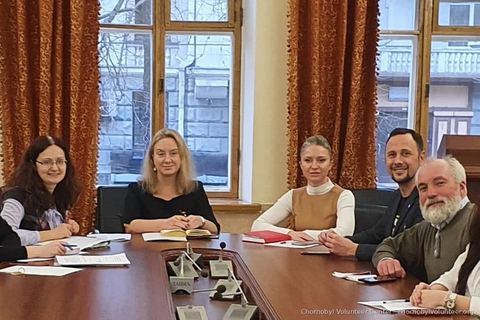
January 16, 2020, Ministry of Culture, Kyiv
The first interagency decision to nominate the Chornobyl Zone for UNESCO
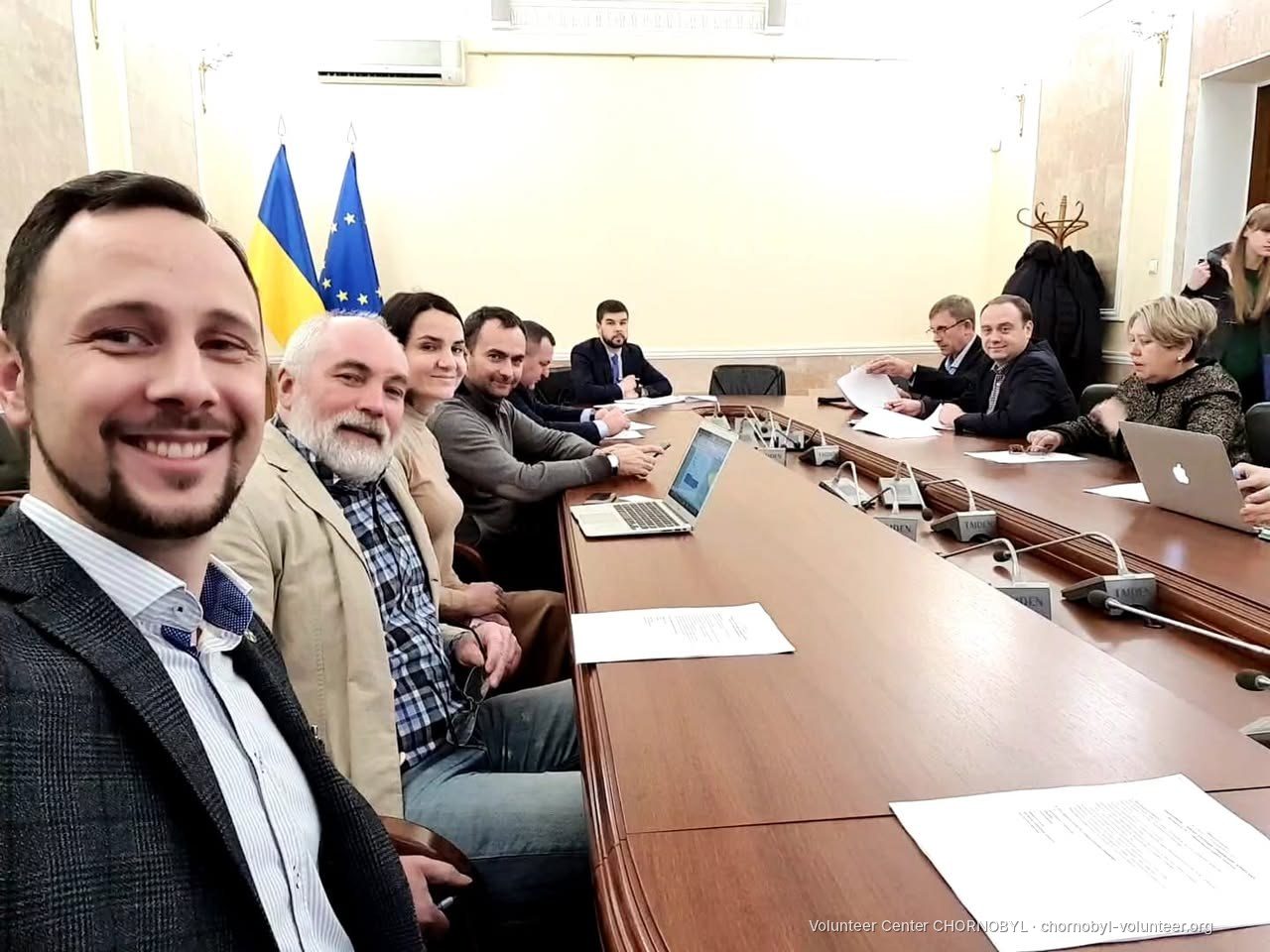
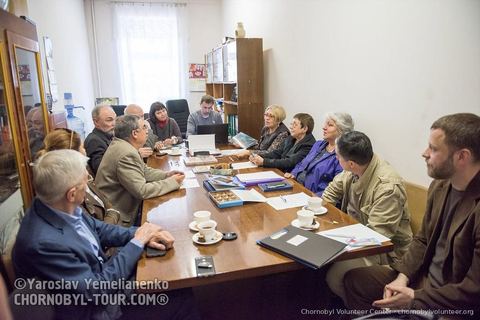
The interagency working group on nominating the Chornobyl Zone for UNESCO was created on our initiative. Two members of our team joined it: Sergii Mirnyi - as an ecologist and head of the Association of Chornobyl Tourism - and Yaroslav Yemelianenko, head of the Association of Chornobyl Tour Operators.
That day the group met at the Ministry of Culture and, for the first time at the interagency level, adopted a decision on the procedure for putting the Zone on the UNESCO lists. "Everyone said yes!" Yaroslav wrote after the meeting, thanking Deputy Minister of Culture Svitlana Fomenko for organizing it and Olena Serdiuk of ICOMOS for her original solutions and knowledge of the law.
The main presentation was given by Sergii Mirnyi. He brought printouts from the UNESCO website and started with why the list exists at all. It has three tasks: to identify, preserve and promote places unique to all of humanity. "Not for a district, not for a region - for humanity."
Then he gave an example. If you search the UNESCO website for the word "radiation," you find one single site - Bikini Atoll. In the photo is a concrete bunker, "a cellar of sorts." And yet it is of unique significance for human history.
To be listed, a site must meet criteria. There are ten: six cultural and four natural. Chornobyl, according to a preliminary analysis, meets at least three, and possibly four.
The first and most important is criterion six: a place directly associated with events of outstanding universal significance. Only twelve places have been inscribed on this criterion alone. Among them are Hiroshima and Auschwitz, but also the hall where the US Declaration of Independence was adopted. In other words, places of both tragic and bright memory. Chornobyl, Mirnyi said, meets this criterion one hundred percent; what remains is to define the site itself. In Hiroshima it is a surviving building and a small plot of land in front of it: a ruin stands - and it is a World Heritage site.
The second is criterion four: an outstanding technological ensemble or landscape illustrating a significant stage in human history. The Zone has countless such sites connected with the accident and its liquidation.
And two natural ones. Criterion nine - ecological processes: Chornobyl's nature is recovering after a radiation blow. Criterion ten - conservation of biodiversity. A few years ago bears came to the Zone, and with their arrival, Mirnyi said, the biodiversity of this ecosystem was fully restored. And that is 2,600 square kilometers of Ukrainian territory alone.
We are often asked why we need this: tourists will visit the Zone without any status. They will. But this is not about profit. Prypiat and the Zone's other sites are worth preserving so that our children can see the place of victory over radiation - and over one of the largest totalitarian regimes of modern times.
Areas: Heritage
Related events
-
-